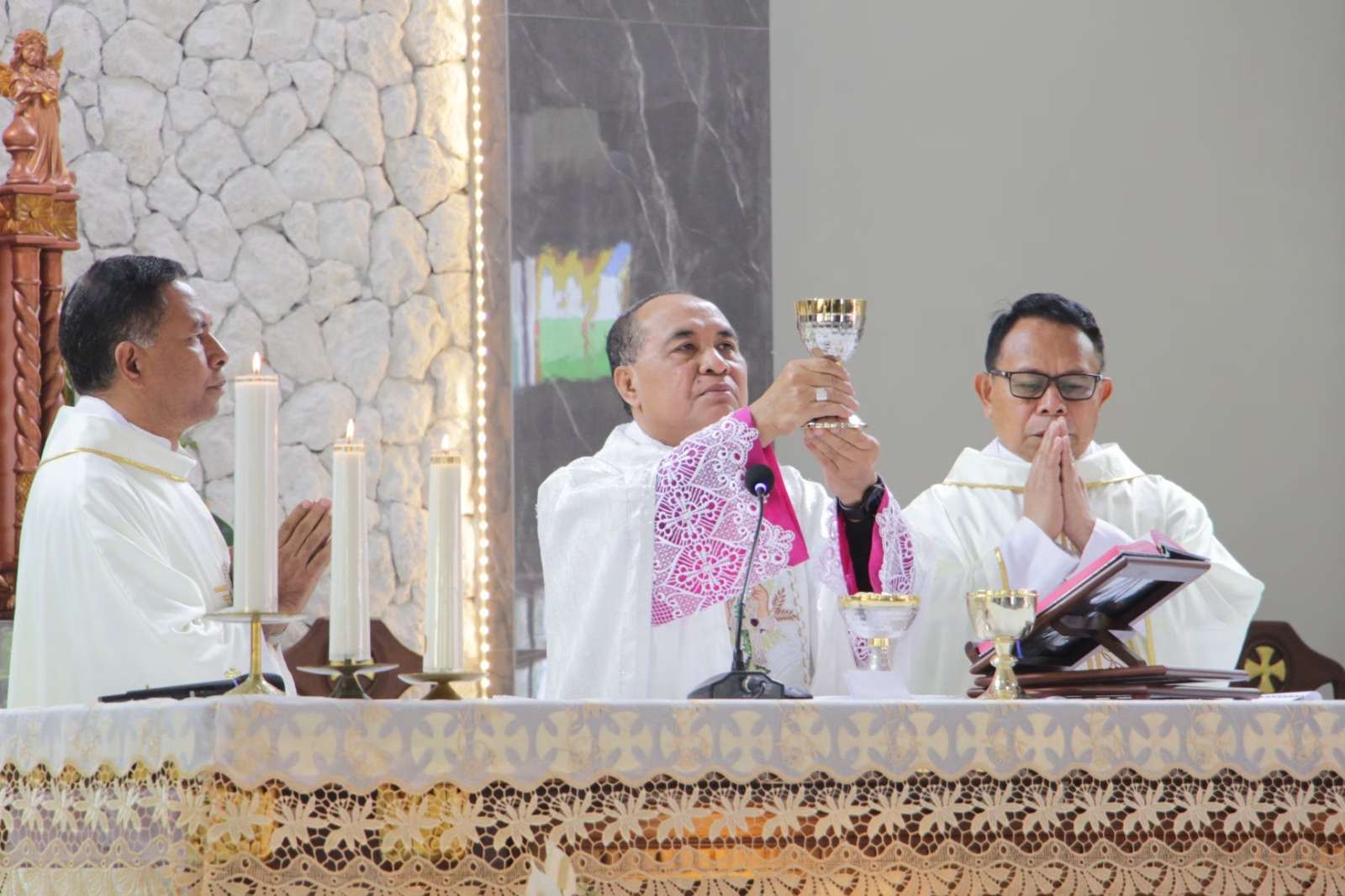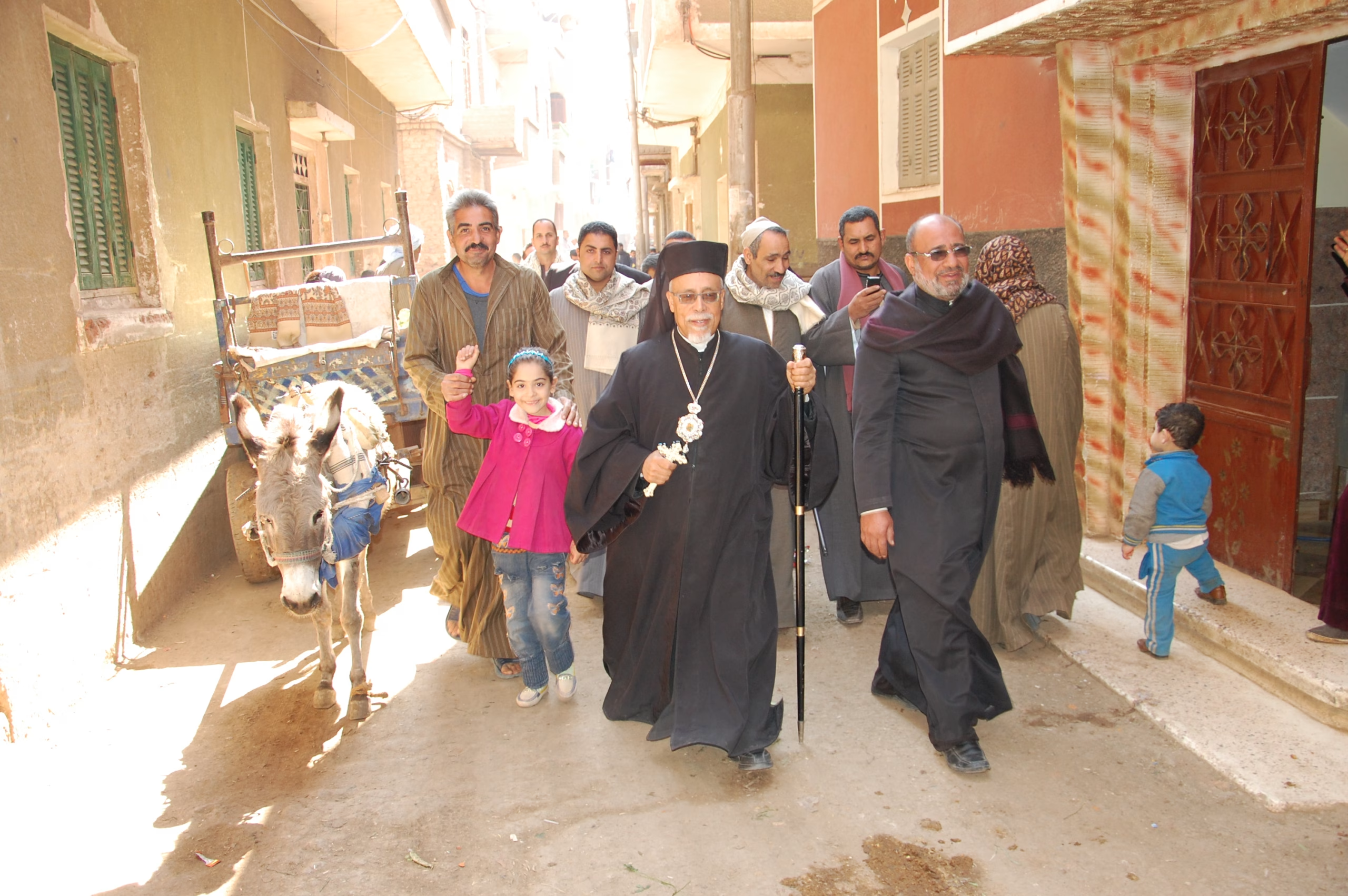
Thirty-six hours by bus, more than 2,000 kilometres, and a shared desire: to meet Pope Leo XIV. For hundreds of faithful from Argentine Patagonia, taking part in the Pontiff’s visit means embarking on a long journey from one of the country’s largest and least populated regions.
“Distance isolates you, but it also challenges you to encounter others,” explains Bishop Roberto Álvarez of Rawson in comments to the pontifical foundation Aid to the Church in Need (ACN).
In the far south of Argentina, the three dioceses of the Patagonian province of Chubut organised several buses so that young people, priests and religious could participate in meetings with the Pope in Buenos Aires and Córdoba. According to the bishop, six buses carried groups of young people, while another transported members of various religious communities, some of them serving in particularly remote areas.
“Some participants came from towns located 2,100 or 2,200 kilometres away from the cities hosting the celebrations,” Bishop Roberto explains.
“The desire to meet the Successor of Peter, to be confirmed in the faith and encouraged in the mission is what motivated so many of us to go,” he says.
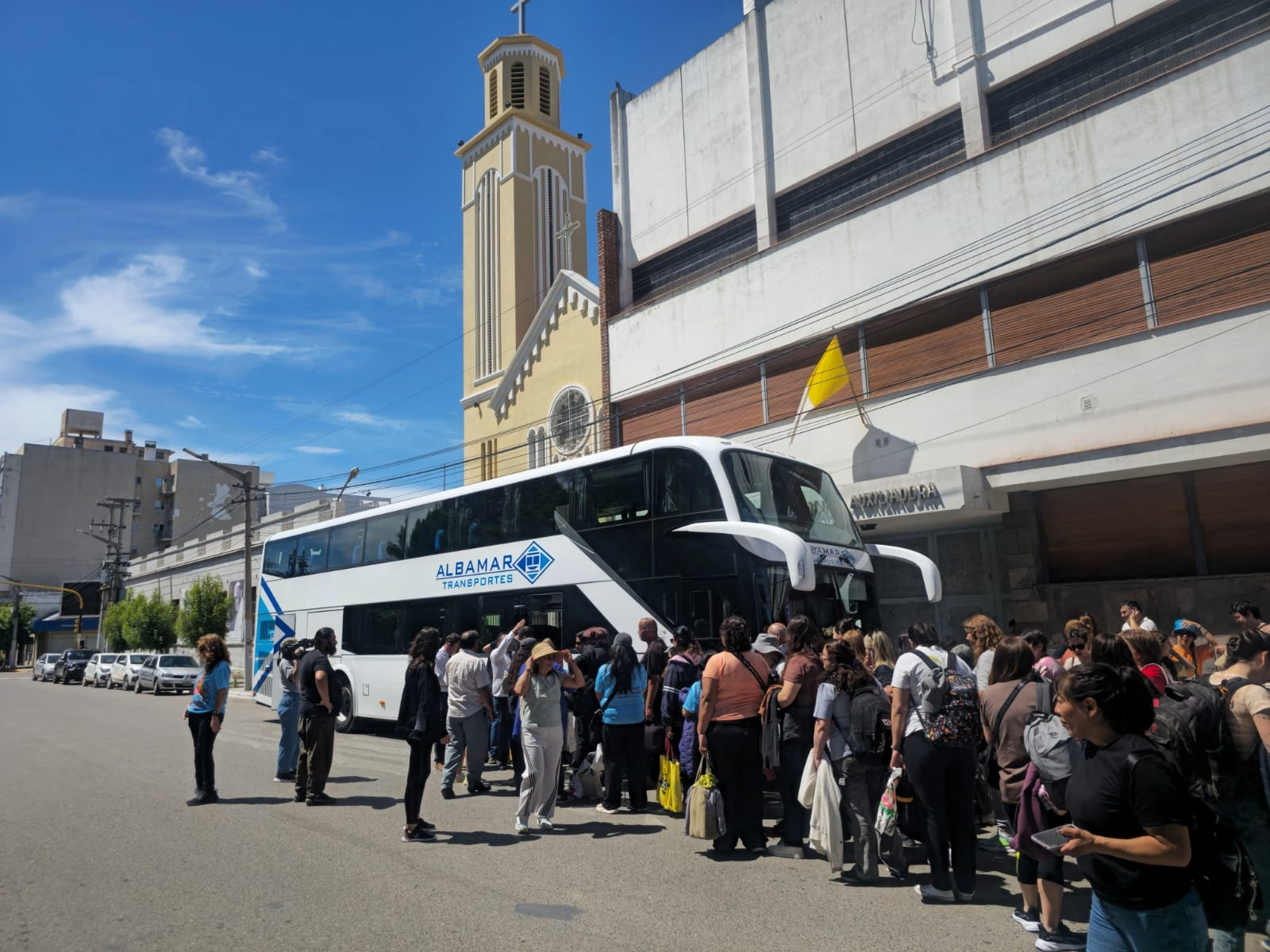
Argentina, 2026. Thirty-six hours by bus, more than 2,000 kilometres, and a shared desire: to meet Pope Leo XIV. For hundreds of faithful from Argentine Patagonia, taking part in the Pope’s visit means embarking on a long journey from one of the country’s largest and least populated regions.
Beyond the financial and logistical effort involved, the bishop believes the journey itself is already an experience of communion. In a region where vast distances make contact between communities difficult, sharing so many hours on the road helps strengthen bonds and experience the universal dimension of the Church.
“Loneliness and distance encouraged and inspired us to make the effort to come together,” he says in his conversation with ACN.
A Young Church in Mission Territory
The Diocese of Rawson is the youngest diocese in Argentina. Established in 2023, it is located in a region of great cultural and religious diversity, where the Christian tradition is less deeply rooted than in other parts of the country.
Bishop Roberto describes it as a genuine “mission territory”, where distances are not merely a problem of transport but one of the greatest challenges to maintaining a stable pastoral presence. Priests, religious sisters and catechists must travel hundreds of kilometres to reach small rural communities and Indigenous populations living far from urban centres.
Isolation becomes even more severe during the winter months, when temperatures can fall to minus twenty degrees Celsius. Yet, according to the bishop, Patagonia has learned to respond to these difficulties with a particular commitment to encounter and solidarity.
“Patagonians choose to take up the challenge and meet one another,” he says.
“May the Pope’s Visit Help Us Build Bridges”
Leo XIV’s visit has generated great hope in Argentina, a country which, according to Bishop Roberto, is experiencing a period of deep internal fragmentation.
“A very fragmented country, a country marked by intense internal conflict, a country that still has not clearly defined what kind of national project it wants, one that includes everyone,” the prelate says.
The bishop hopes one of the lasting fruits of the visit will be a greater capacity for dialogue: “I would love the lasting legacy of the Pope’s visit to be a significant reduction in the level of conflict in political dialogue.”
His hope is that different groups, even while holding different visions for the nation’s future, can find common ground.
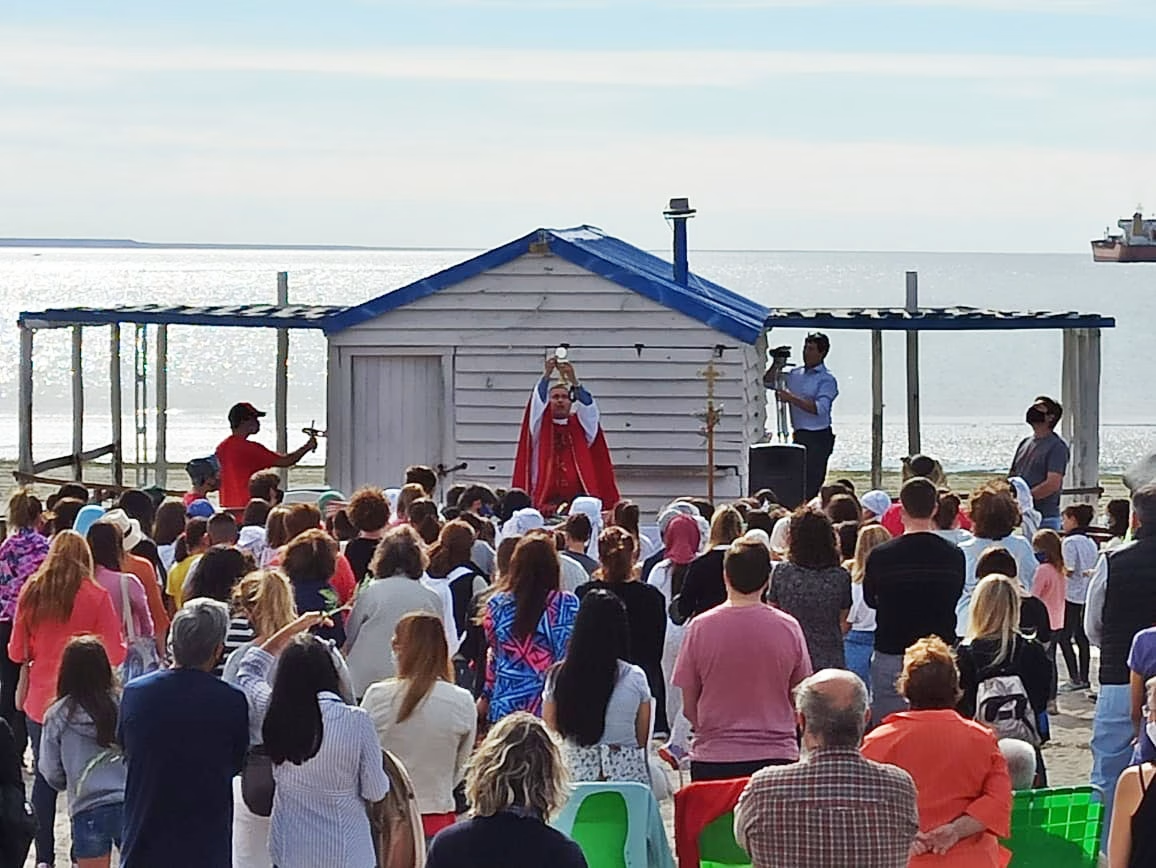
Argentina, Patagonia. Roberto Álvarez, Bishop of Rawson, Argentina. Holy mass by the sea.
At the same time, he acknowledges the challenges facing the Church in Argentina, where the number of baptised Catholics remains high but participation in and daily practice of the faith have declined over recent decades.
Nevertheless, he sees signs of hope, especially among young people who look to the Church as a place where they can develop lasting projects, find meaning in their concerns and channel their desire for justice and service to others.
ACN: Ensuring No Community Is Forgotten
The pontifical foundation supports a permanent mission on the central plateau of Chubut. ACN’s assistance covers essential expenses such as fuel, tyres, food, accommodation and heating, which are particularly important during winters when temperatures can fall many degrees below zero. This support helps maintain a pastoral presence that would otherwise be extremely difficult to sustain.
The foundation also supports eight Sisters of the Congregation of Saint John the Baptist working in Dolavon and Las Plumas. Their ministry includes catechesis, evangelisation and visits to vulnerable families. The aid helps cover their living and medical expenses.
ACN also assists with the annual regional gatherings of the local Church, which bring together around 150 people. These meetings are especially important in a territory where isolation makes community life difficult.
In Rawson, this is precisely the Church’s challenge: ensuring that no community, however remote, is forgotten.