Lebanese Christians represent one of the oldest continuous Christian communities in the Middle East, now facing unprecedented challenges amid escalating regional tensions. With the ongoing war between Israel and Hezbollah and with Lebanon’s Christians caught in the cross fire, Lebanon continues to be a priority country for emergency aid and ongoing support from Aid to the Church in Need (ACN).
Who are the Christians of Lebanon?
The Lebanese Christian community forms a significant religious minority, comprising approximately 32% of Lebanon’s population. With roots dating back to the 1st century AD, these communities have played a pivotal role in shaping Lebanon’s cultural and political landscape since the country’s independence in 1943.
The Lebanon Christian population is remarkably diverse, with several denominations coexisting. The Lebanese Maronite community constitutes the largest group, primarily concentrated in Mount Lebanon and Beirut. Other significant denominations include Greek Orthodox (the second-largest group), Melkite Catholics, and Armenian Orthodox Christians, who maintain a strong presence in urban areas, particularly Beirut.
Unlike many neighboring countries, Lebanon’s constitution ensures political representation for Christians, with the presidency traditionally reserved for a Maronite Christian. However, the absence of an official census since 1932 has complicated demographic assessments, with many experts noting a gradual decline in the Christian population due to lower birth rates and emigration.
Hezbollah and the suffering of Lebanese Christians
The relationship between Lebanese Christians and Hezbollah has been complex and often tense. As the Israel-Hezbollah conflict intensifies, Christian communities, particularly those near the southern border, face severe hardships. Thousands of Lebanese Christians have been displaced from their homes, seeking refuge in safer regions or with relatives in Beirut.
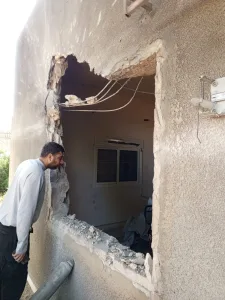
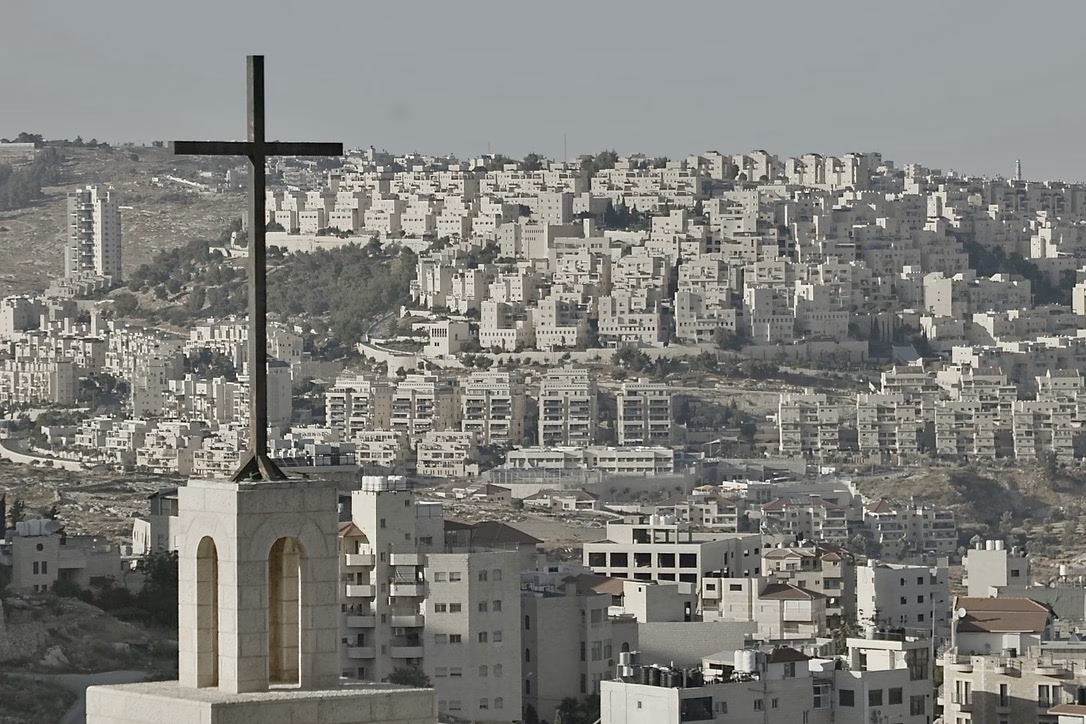
Damaged houses belonging to the parishioners of the Maronite diocese of Tyr
According to data collected by Aid to the Church in Need (ACN) in Lebanon, up to 90% of the population of several Christian villages has left since October, seeking safety in other parts of the country. While many Christian families have fled to safer areas, priests and religious stay to minister to those who remain to look after their homes, or who are too old or frail to relocate.
Since the beginning of the military operation against Hamas, in the Gaza Strip, Israel and Hezbollah exchanged near daily rocket fire in the south of Lebanon until the cease fire in November 2024. The fear of a return to war in southern Lebanon brings back memories of the 2006 War, and, local religious leaders say, is a threat to the historic Christian presence in the region.
They describe Alma el Chaeb as the worst affected village so far, where 15 houses were destroyed by rocket fire, and members of a family with children attending the Catholic school in the village were killed. In Yaroun the Melkite Catholic Church was damaged, although fortunately nobody was wounded.
“The situation is disturbing. People are too afraid to go into their fields, so there is an economic impact on these families, many of whom are already poor as a result of Lebanon’s ongoing financial collapse,” said Xavier Stephen Bisits, who is responsible for ACN projects in the region.
ACN’s help for Christians in Lebanon since the war with Israel and Hezbollah
Lebanon is priority country for Aid to the Church in Need (ACN) and in response to the deepening humanitarian crisis in the country, the Charity is stepping up its support, responding to the urgent needs of families affected by the escalating conflict in southern Lebanon. In cities like Tyre and Sidon, where Christian families who rely on agriculture have seen their livelihoods destroyed by the war and many people have had to flee their homes leaving everything behind, ACN is providing emergency aid including food, medicine, mattresses, sanitary products and other basic necessities to thousands of vulnerable families, including the elderly.
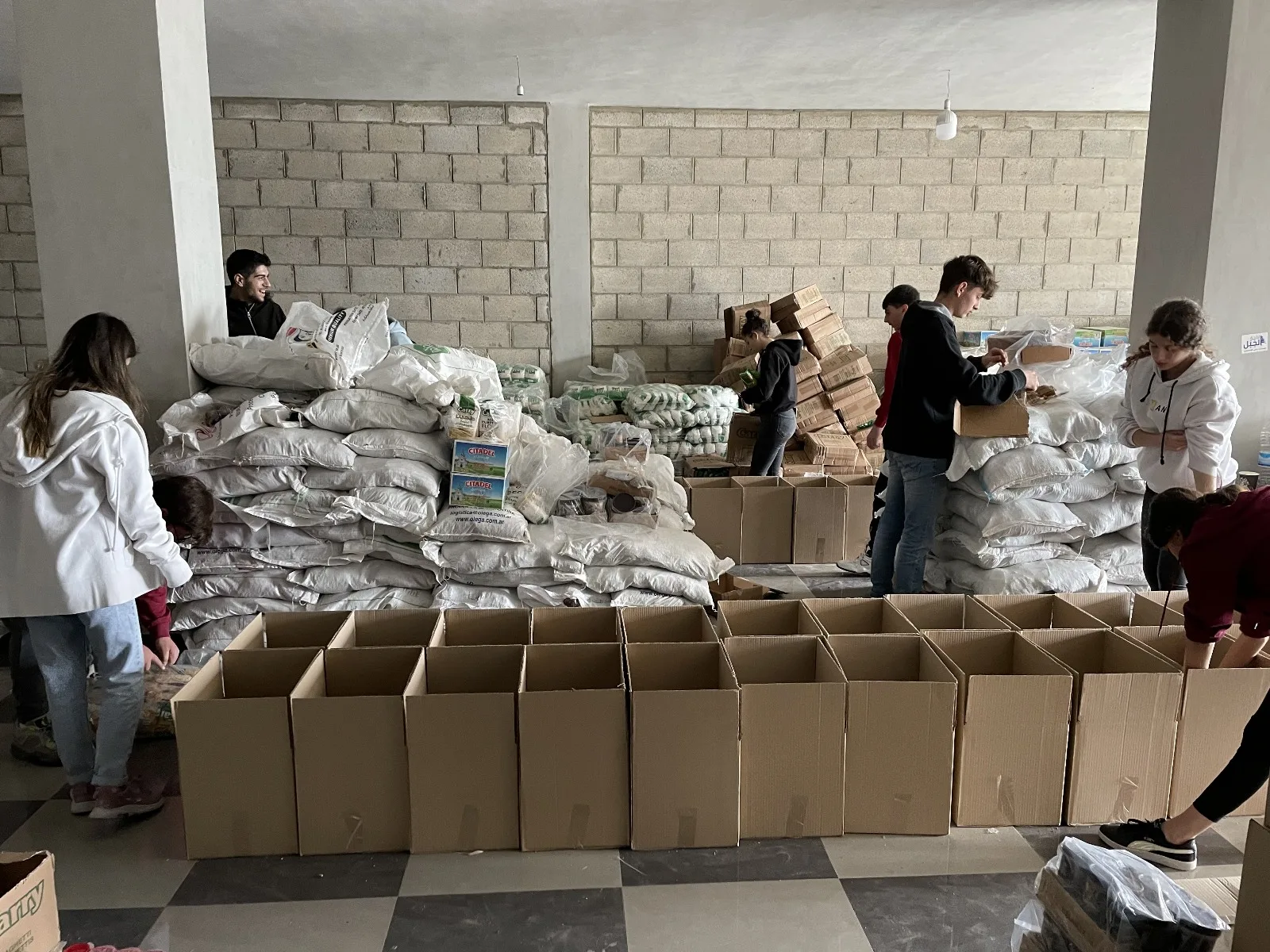
ACN supported Food packages and hygiene products for families, Diocese Maronite de Saida
ACN has also approved a number of emergency projects to support the Church in southern Lebanon, including food packages, medical and social assistance, operational aid for Catholic schools, equipment for a Catholic dispensary, and the distribution of hygiene necessities. ACN is partnering with the local Maronite and Melkite Churches, as well as the the Sisters of the Sacred Hearts of Jesus and Mary.
Despite numerous challenges, including security concerns and limited access to affected areas, ACN continues to coordinate with local churches and partner organizations to maximize the effectiveness of its vital aid projects. Our sustained help offers a crucial lifeline to Lebanese Christians determined to preserve their heritage and presence in this troubled region.